Most people have experienced a situation that feels out of their control. They see the car coming but there is nothing they can do to get out of the way. The company is going out of business and there is little work in their field. A loved one gets diagnosed with a potentially life-threatening illness. As humans we often feel helpless when the circumstances outweigh our resources. The good news is most people manage to cope with the situation and can move on with their lives with minimal impact. As adults we have hopefully learned some skills and developed some networks that protect us from the long-term effects of trauma.
What happens when the person experiencing the trauma is five years old? What if the situation that is beyond their control is being physically abused several times a week? What if the perpetrator is one of those people who should be protecting them, like a parent? No one would expect a child to have the resources or ability to manage a situation like this, and there is where complex trauma is born.
NAMI (National Alliance of Mental Illness) reported 50% of youth between 6-17 years of age received mental health treatment in 2018. Further, nearly 9 million adults were diagnosed with Post Traumatic Stress Disorder in 2016. Add on the fact that suicide is the second leading cause of death for people ages 10-34 you begin to realize the problem of trauma is larger than you may have believed. And yet, the world is still wrought with inaccurate beliefs about adolescents with mental illness and PTSD.
MYTH 1: They are only acting that way to get attention

There is a common misconception that when children act out, they are seeking attention. However, what we know is all behavior serves a purpose. Sometimes what looks like inappropriate behavior is actually a survival tool that helped someone manage a difficult situation. Now that they are out of the situation that behavior is no longer needed, yet they engaged in it for so long to get their needs met that it has become as natural as blinking their eyes. Aggression, for example, may be a child’s learned behavior to keep people away from them as people are not safe in their eyes.
MYTH 2: It happened so long ago they should be able to forget about it.
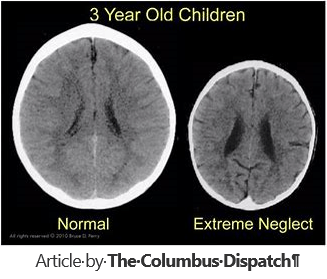
Unfortunately, as more research is done in the area of childhood complex trauma, we are learning that trauma is more than a memory. It is not simply events that happened in someone’s life that they may or may not remember. Early complex trauma affects individuals biologically, most obviously in the structure and size of their brains. Childhood victims become adult survivors with smaller brain structures, such as the hippocampus and frontal lobe, as well as super powered structures including the amygdala-the driving force of the fight, flight, or freeze response. In addition, their brains have been found to be physically smaller. Newer research is showing trauma even has the power to cause genetic mutations that can transmit a parent’s trauma to their child through DNA.
MYTH 3: Trauma and PTSD are only mental health disorders
Thanks to Dr. Felleti and the ACE’s study we have learned that trauma has a major impact on the overall health and life span of a person. Adults and children with a history of complex trauma are often treated for chronic, potentially life-threatening diseases that are preventable and a direct result of trying to cope with their overwhelming experiences. Not only do adults with trauma histories die approximately 20 years earlier from preventable disease, this also impacts the health care system as whole including the cost of services, health insurance, and life insurance premiums. Below is a video of Nadine Burke Harris, MD, giving a TedTalk on her experience with trauma from the medical perspective.
MYTH 4: PTSD is a life-long struggle and cannot be effectively treated
There are several options for treating PTSD from traditional psychotherapies to medications. One of the most well-known treatments is Trauma Focused Cognitive Behavioral Therapy (TF-CBT) where clients receive psychoeducation about trauma, develop coping skills, and use these to process their “trauma narrative”. Other evidence-based practices include EMDR (Francine Shapiro, PhD), Progressive Counting (Ricky Greenwald, PhD), and Trauma Based Yoga (Bessel van der Kolk, MD). Newer research is finding exposure therapy, including the use of Virtual Reality as part of treatment, is also helpful. There are also some medications that help manage symptoms of PTSD such as Prazosin, Zoloft, and Paxil-all of which are approved for the treatment of PTSD. Treatment, however, does not erase the trauma but rather allows the person to live the best life they can with their trauma.

MYTH 5: Everyone reacts to trauma the same way
One of the side effects of the DSM V (Diagnostic and Statistical Manual Version 5) is the belief diagnoses are simply check off lists of symptoms, and that the symptoms listed in the manual are the only way in which the disorder manifests. That could not be further from the truth. There are people diagnosed with depression who do not sleep all day in a dark room, refusing to get up or shower-they go to work and do what they must at great personal strain, or in children who look irritable or angry. The same holds true for trauma. No two people experience trauma the same way so no two people will experience traumatic grief in the same way either. If one looks at the criteria for a diagnosis of PTSD they will find there are multiple criterion with multiple symptoms in each, making PTSD a personal experience.

What is quite clear is complex trauma has detrimental effects on all aspects of a person’s life and death and is simply not something that can be ignored. Trauma, and trauma related disorders, are treatable and people can live meaningful healthy lives. It is up to the lucky ones, those who have not endured the terrible experiences of ongoing physical, sexual, and emotional abuse and neglect to reach out and support our children and young adults. They are the next generation and they deserve as much happiness as anyone.
Don’t believe me, watch this video of teens and young adults speak of their personal experiences:
 Catherine's Field of Ideas