Trauma and Human Rights as they relate to children has recently become a hotbed of discussion with the detainment of children at the international borders of the United States. News feeds are ripe with reports of deplorable living conditions, insufficient medical care, inhumane treatment, and trauma. Are these stories so different than that of the Internment Camps during World War II or Native American Boarding Schools?
It seems to this writer it is all too often forgotten by the adults of society that children are people too. Adults make decisions for themselves without considering the impact on their children or for their children that can be detrimental to their well-being. In fact, it has only been 81 years since the government had to step in and make laws against child labor.
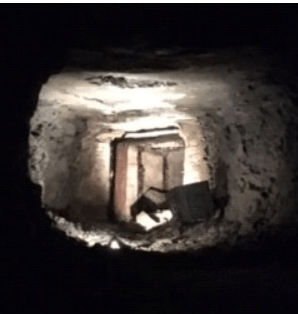
I took my children to the Lockport Caves this summer where we learned about “powder monkeys”. While trying to blast out the rock to build factories, boys 8-12 were hired to light the dynamite fuses because they were smaller and could run faster. Imagine today letting your child take a job where they went hundreds of feet underground, crawled into small holes with matches, lit the fuse on an explosive and then ran like crazy to get far away enough to not be blown up or crushed by a cave in, only to do this over and over again?
In 1938 the U.S, Government enacted the Fair Labor Standards Act (FLSA) which set age limits and guidelines for the employment of children, including guarantees for fair pay, non-interference with education, and a level of safety. This was the beginning of defining some rights for children.
As young as these laws protecting children from unfair labor are, the laws around child welfare are shockingly younger! Although a Children’s Bureau was founded in 1912, little attention was paid to the welfare of children until the 1960’s. Children were considered property of their parents and therefore parents had the right to manage their property as they deemed fit. In 1974 Congress passed the Child Abuse Prevention and Treatment Act (CAPTA), which was the first major legislation regarding child abuse and requiring states to develop a means of reporting abuse.
In 1974:
- Women had the right to own property for 74 years
- Women had been voting for 54 years
- Native Americans had begun to be recognized as citizens for 50 years
- People of African Decent had held the right to vote for 9 years
- Native American Civil Rights Act was 6 years old
Children are both one of our most vulnerable and most valuable assets. This makes them as priceless as any natural resource. Yet these children are still falling victims to abuse from the micro level to the macro level. According to the U.S. Department of Health and Human Services, Administration for Children and Families Administration on Children, and the Youth and Families Children’s Bureau, the following is the child abuse statistics for 2017:
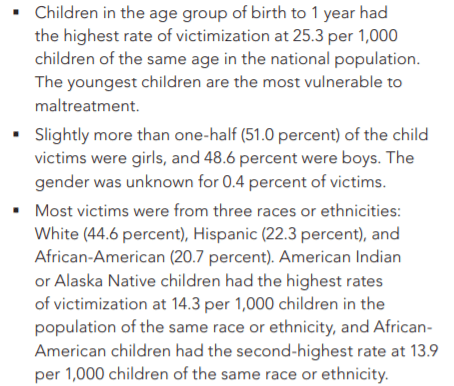
The most concerning aspect of these statistics is the level of abuse in children under three years of age. Not only are these the primary years of identity formulation they are also the years of verbal development. SO why is that important. Children are experiencing traumatic events during the time they are developing their sense of the world and of themselves, often creating a very negative and maladaptive pattern of thought and behavior. These can lead to contact with mental health and legal communities. However, because the abuse happened before language traditional expressive therapies are ineffective. This creates a difficult position for parents, teachers, peers, and the community for the best way to understand and help these children.
In these cases, prevention is most likely the best intervention. In lieu of this, those charged with caring for and raising victims of early childhood trauma will benefit from education about early life trauma and ways to support their children. It is in this endeavor I hope to bring together education, support, and people for the sake of the children. In the end, it really does take a village.

 Catherine's Field of Ideas